

Introduction
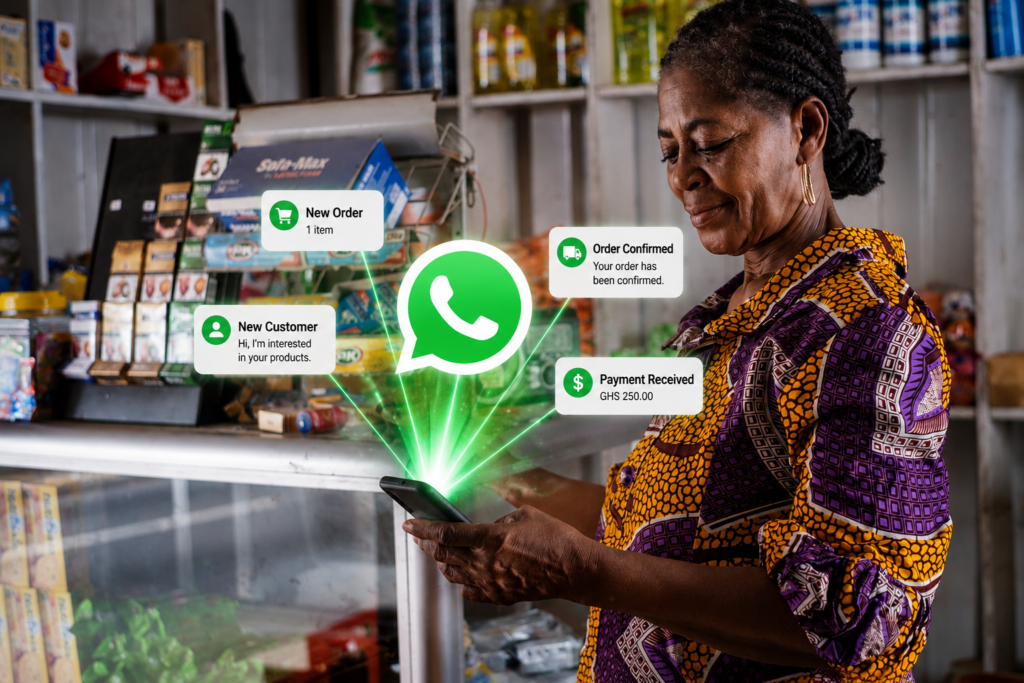
Ask almost any Ghanaian how they reach friends, family, churches, work groups and their favourite vendors, and the answer is the same: WhatsApp. It’s where the country actually talks. So here’s the question every business should be asking: if your customers live on WhatsApp, why is your marketing still stuck somewhere else?
WhatsApp marketing is one of the most underused, highest-return tools available to Ghanaian businesses — and in 2026 it’s only getting more powerful. This guide shows you how to turn everyday chats into a reliable sales channel, without spending a fortune or annoying your customers.
Why WhatsApp marketing works so well in Ghana
Ghana is a mobile-first, chat-first country. With internet penetration around 74.6% and WhatsApp consistently among the most-used platforms, it’s where attention already lives. Local market reporting confirms that WhatsApp keeps growing as a customer communication and conversion platform thanks to high mobile penetration.
The standout advantage is open rates. While marketing emails often go unread, messages people receive on WhatsApp get opened at dramatically higher rates — local guidance puts WhatsApp open rates far above email’s. When a customer has actively chosen to chat with your business, your message lands where they’re already paying attention.
In short: low cost, high attention, instant two-way conversation. That’s a powerful combination for a small business.
WhatsApp Business vs. regular WhatsApp
If you’re still selling from a personal WhatsApp account, switching to the free WhatsApp Business app is the first easy win. It adds features built for selling:
-
- Business profile — your hours, location, website and description.
-
- Product catalog — showcase items with photos and prices right inside the chat.
-
- Quick replies — save and reuse answers to common questions.
-
- Labels — organize chats (e.g. “New lead”, “Paid”, “Follow up”).
-
- Automated greetings and away messages — respond instantly even when you’re busy.
For larger operations, the WhatsApp Business Platform (API) unlocks broadcast at scale, chatbots and CRM integration — but most SMEs can achieve a lot with just the free app.
How to turn WhatsApp chats into sales: a practical playbook
1. Build your list the right way — with consent
Never add people to broadcasts without permission; it’s the fastest way to get blocked. Instead, invite customers to opt in: add a “Chat on WhatsApp” button to your website and social profiles, share a click-to-chat link, and ask at checkout, “Would you like updates and offers on WhatsApp?”
2. Use Broadcast Lists, not noisy groups
Broadcast Lists send your message to many contacts individually — each person replies privately, and no one sees the others. This keeps things personal and professional. Avoid herding customers into a group chat where they’re bombarded with strangers’ messages.
3. Set up your catalog and quick replies
Load your products or services into the catalog so customers can browse and buy without leaving the chat. Create quick replies for your most common questions — price, delivery, payment, location — so no lead waits long for an answer.
4. Personalize and segment
Use labels to group customers (new leads, repeat buyers, VIPs) and tailor your messages. A returning customer might get a loyalty offer; a new lead might get a first-purchase discount. Relevant messages convert; generic blasts get ignored.
5. Drive sales with timely, useful messages
Send offers tied to local moments — Detty December, back-to-school, Eid, Christmas, salary week. Share product launches, restock alerts, and helpful tips. The rule of thumb: every message should feel useful to the customer, not just useful to you.
6. Make paying easy
Confirm orders, share mobile money details clearly, and send a friendly payment reminder when needed. The smoother the path from “I want it” to “I’ve paid,” the more chats become sales.
7. Follow up and nurture
A polite “Did your order arrive okay?” or “Here’s something you might like based on your last purchase” turns one-time buyers into repeat customers — the cheapest growth there is.
A real-world example
Esi sells handmade bags from her home in Kumasi. She used to post on Instagram and lose interested buyers in slow DMs. After switching to WhatsApp Business, she added a click-to-chat link to her bio, loaded her catalog, and set quick replies for price and delivery. She built an opt-in broadcast list and sent a tasteful new-collection message before Christmas.
The result: customers browsed her catalog in-chat, asked questions, paid by mobile money, and reordered — all in one place. She didn’t spend more on ads; she simply moved her selling to where her customers already were.
Key takeaways
- WhatsApp is Ghana’s highest-attention channel — extremely high open rates and instant two-way conversation.
- Switch to the free WhatsApp Business app for catalogs, quick replies, labels and automation.
- Grow your list with consent, use Broadcast Lists (not groups), and personalize your messages.
- Tie offers to local moments, make mobile money payment easy, and follow up to drive repeat sales.
Frequently Asked Questions
Is WhatsApp marketing legal in Ghana?
Yes, when done responsibly. Always get permission before messaging people, make it easy to opt out, and avoid spamming — both to respect customers and to keep your account from being blocked.
Do I need the WhatsApp Business API?
Most small businesses don’t. The free WhatsApp Business app covers catalogs, quick replies and broadcasts. The API is for larger businesses needing automation and CRM integration at scale.
How often should I message customers?
Quality over quantity. A few genuinely useful or timely messages a month usually beats frequent promotional blasts that lead to mutes and blocks.
Can WhatsApp replace social media or a website?
It works best alongside them. Social media and search attract new people; WhatsApp converts and retains them. Together they form a strong, low-cost funnel.
Conclusion
For Ghanaian businesses, WhatsApp isn’t just a messaging app — it’s a sales floor, a customer service desk and a loyalty programme rolled into one. Used with consent, structure and genuine helpfulness, it can quietly become your most profitable marketing channel.
The opportunity is sitting right there in your customers’ pockets. The only question is whether your business shows up where they already are.
At Pemia Digital, we help Ghanaian businesses build WhatsApp and messaging strategies that turn conversations into customers. Get in touch for a free consultation and let’s set up a channel that actually sells.
